Animals Coloring Pages for Kids
Animals Coloring Pages for Kids isn’t just another coloring book—it’s a thoughtfully crafted creative tool built for real-world use across print, digital, and commercial projects. Designed with children’s developmental needs in mind, each page features bold, clean outlines, generous white space, and intentional simplification—never oversimplified. The animals are expressive but not cartoonish: friendly foxes with gentle eyes, curious owls with soft feathers suggested through subtle line weight variation, and playful bunnies whose contours invite confident coloring without visual clutter. This balance of charm and clarity makes the collection equally effective for early learners and older kids building fine motor control.
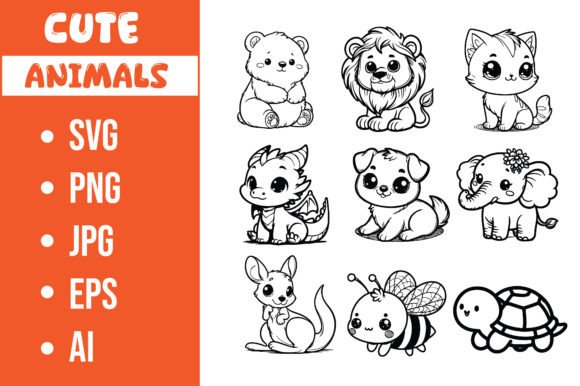
What sets these pages apart is their technical readiness for professional workflows. Every illustration is delivered at true 300 DPI resolution—no upscaling, no pixelation—ensuring crisp output whether printed on newsprint or premium matte paper. And unlike many KDP interiors that offer only flattened JPGs, this package includes layered, editable source files: EPS and AI formats for precise vector adjustments in Illustrator, SVG for web integration or Cricut/Silhouette cutting, plus high-res PNGs with transparent backgrounds for flexible compositing. That means you’re not just buying coloring pages—you’re acquiring scalable design assets.
Where These Pages Deliver Real Value
This isn’t just about coloring—it’s about utility. Designers use these pages as foundational elements in editorial layouts, turning them into illustrated headers or chapter dividers in children’s activity books. Bloggers and educators embed the SVG versions directly into interactive learning modules, animating individual animal parts or layering text callouts. Marketers repurpose the clean line art for social media graphics—think Instagram story templates where users “color” one element per day, or printable PDFs bundled with email signups. Crafters laser-cut the SVG files into wooden puzzles or fabric stencils. Small publishers integrate them into themed workbooks (ocean animals + math problems, forest friends + phonics) without worrying about licensing conflicts or pixelated blowups.
The consistent 300 DPI standard also supports hybrid production models. You can generate print-on-demand interiors for Amazon KDP while simultaneously exporting optimized web versions for your own shop—same source, different outputs, zero rework. That kind of efficiency matters when you're juggling multiple product lines or seasonal launches.
Design Integrity Meets Practical Flexibility
These aren’t traced clipart knockoffs. Each animal was drawn by hand first, then digitized with attention to stroke consistency, corner treatment, and proportional harmony. Line weights stay between 1.5–2.5 pt—thick enough for preschoolers to stay inside boundaries, thin enough to retain detail for ages 7–10. Negative space is intentionally generous, avoiding cramped compositions that cause frustration or unintentional bleed-through on thinner paper stocks.
That intentionality translates directly to audience engagement. When kids feel successful—not overwhelmed or discouraged—they return to the page. When parents see clean, well-proportioned art, they perceive higher value. When retailers spot cohesive, professional-grade interiors, they’re more likely to stock your book alongside established brands. It’s subtle, but it compounds: better readability → longer attention spans → stronger brand recall → repeat purchases.
Smart Implementation Starts With Smart Evaluation
Before dropping these into your next project, ask three practical questions:
- Does the line art scale cleanly to your intended size? Test a fox outline at both thumbnail (1.5" wide) and full-page (8.5" x 11") sizes. If details vanish or strokes become muddy below 2", adjust spacing or simplify further in your editor.
- How does it pair with your typography? These pages work best with friendly, highly legible sans serifs (like Poppins or Quicksand) for titles and clear, open serif fonts (such as Merriweather or Lora) for instructions. Avoid tightly spaced script fonts—they compete visually with the hand-drawn warmth of the animals.
- What’s your output path? If you’re using this for physical products, prioritize the EPS/AI files for precise color separation and bleed setup. For web or app use, rely on SVG—small file size, infinite scalability, and native support for interactivity.
Also review the included file structure before editing. The AI file maintains layers (outline, optional shadow, label placeholder), letting you toggle visibility or recolor non-destructively. The SVG retains grouping logic, so you can animate ears separately from bodies. That level of organization saves hours—especially when iterating across multiple SKUs or language versions.
Licensing That Supports Your Business—Not Restricts It
This is a commercial-use license, plain and simple. You may use these Animals Coloring Pages for Kids in unlimited physical and digital products—including KDP interiors, Canva templates, printable planners, craft kits, and even merchandise like tote bags or mugs—as long as the artwork isn’t resold as standalone clipart or redistributed in editable form. No attribution required. No monthly fees. No hidden caps on units sold.
But here’s what most listings don’t tell you: the license covers derivative works *only* when significantly transformed. Turning a panda outline into a greeting card with custom typography and layout? Yes. Uploading the raw PNG to a free graphic site with your name removed? No. The distinction matters—not for legal CYA, but because respecting the integrity of the original design helps maintain quality expectations across your entire catalog.
Realistically, if you’re building a brand around joyful, accessible learning tools, these pages function as quiet brand ambassadors. They don’t shout. They support. They adapt. And because they’re built on solid design fundamentals—not trends—they won’t look dated in 12 months. That longevity reduces your need to constantly refresh assets, freeing up bandwidth for what actually moves the needle: better content, smarter outreach, and deeper audience connection.