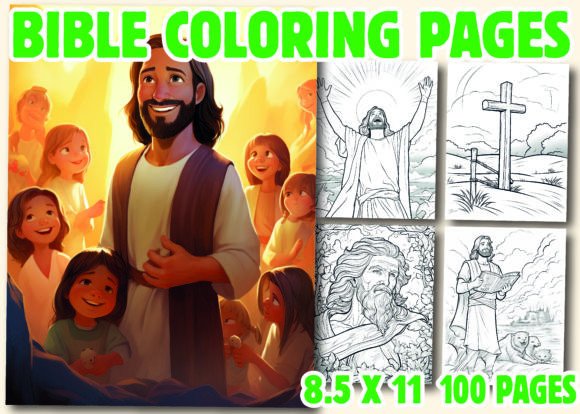
Bible Coloring Pages for Kids: A Practical Guide to Building High-Content KDP Books with Purpose and Precision
Creating a successful high-content book on Amazon Kindle Direct Publishing demands more than volume—it requires intentionality, usability, and alignment with real user needs. Bible Coloring Pages for Kids sits at a meaningful intersection: spiritual formation, childhood development, and digital publishing efficiency. When executed well, this niche delivers measurable value across multiple audiences—not just parents and Sunday school teachers, but also educators integrating faith-based SEL (social-emotional learning), therapists using art as regulation tools, homeschool co-op coordinators, and even small church ministries seeking affordable, printable resources.
Why Resolution, Format, and File Diversity Matter More Than You Think
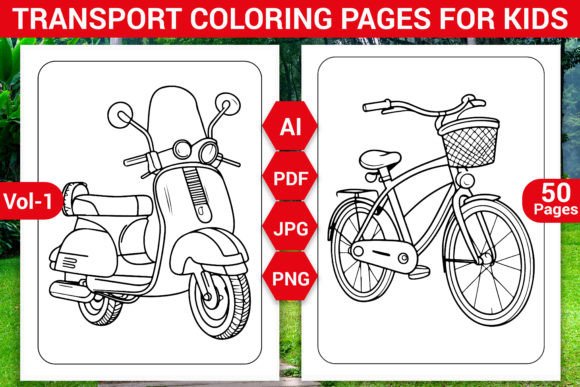
Many creators assume that “100 coloring pages” is enough—but in practice, what determines actual usability—and therefore customer satisfaction and repeat purchases—is how those pages are delivered and structured. The specification list you’re working with—8.5″ x 11″ inch sizing, 100 PNGs, 100 JPGs, plus an AI source file and PDF—represents a deliberate workflow architecture, not just packaging fluff.
High-resolution coloring book pages aren’t merely about visual clarity; they’re about functional flexibility. PNG files preserve transparent backgrounds, enabling easy layering in design software like Canva or Adobe Express—ideal for educators who want to add scripture references, discussion prompts, or custom headers before printing class sets. JPGs offer universal compatibility and smaller file sizes, perfect for emailing to volunteers or embedding in digital lesson plans. The AI source file (typically .ai or .svg) allows professional customization: resizing without pixelation, adjusting line weight for younger children’s motor skills, or converting line art into tactile-friendly raised-line versions for inclusive classrooms.
Crucially, the 8.5″ x 11″ standard isn’t arbitrary. It matches US letter-size printers—the most common hardware in homes, churches, and schools. Deviating to 7″ x 10″ or A4 may seem subtle, but it triggers real friction: misaligned margins, unexpected cropping, wasted paper. That small mismatch directly impacts perceived quality and increases negative reviews (“pages don’t fit my printer”), even when content is excellent.
Designing for Developmental Appropriateness—Not Just Aesthetics
A truly effective Bible Coloring Pages for Kids interior goes beyond biblical accuracy—it responds to cognitive, motor, and attentional milestones. Consider this breakdown across age bands:
- Ages 3–5: Bold outlines (minimum 3pt stroke), minimal internal detail, large open spaces, and single focal characters (e.g., “Noah holding one dove,” not “Noah’s Ark with 27 animals”). These support pencil control and reduce frustration.
- Ages 6–8: Moderate complexity—light background elements (e.g., stars around Daniel in the lions’ den), labeled body parts for learning (“David’s sling,” “Ruth’s sheaf”), and intentional white space to avoid visual overwhelm.
- Ages 9–12: Narrative sequencing (three-panel depictions of the Prodigal Son’s journey), subtle symbolism (olive branch + rainbow = covenant themes), and margin space for journaling or scripture copying.
This tiered approach transforms your interior from passive coloring into active engagement. Teachers report higher retention when children color while listening to a Bible story aloud—motor activity reinforces auditory processing. Therapists use these pages during calm-down routines, pairing deep breathing with slow coloring strokes. Homeschoolers integrate them into unit studies: coloring Ruth’s field while learning about barley harvest cycles, or sketching the Tabernacle layout while studying Exodus 25–27.
How File Structure Supports Real-World Workflows
The inclusion of three distinct image formats—PNG, JPG, and AI—reflects how different users actually work. Here’s how each functions in practice:
- PDF interior: Optimized for direct KDP upload. Contains bleed-safe margins (0.125″), CMYK color profile for accurate print rendering, and embedded fonts where text appears (e.g., “John 3:16” beneath the cross illustration). This file is what goes straight into your KDP dashboard—no reformatting needed.
- PNG collection: Organized numerically (001_Noah_Ark.png, 002_Jonah_Whale.png) with consistent naming. Enables batch importing into learning management systems (LMS) like Google Classroom or Canvas. Educators can assign specific pages as weekly “Bible Art Challenges” without downloading full PDFs.
- AI source file: Layered and named logically (e.g., “Line_Art,” “Text_Scripture,” “Background_Design”). Allows experienced designers to extract only the line art for laser-cut stencils, adjust contrast for dyslexic-friendly line clarity, or convert scenes into animated flipbook sequences for YouTube Shorts.
This structure eliminates guesswork. A children’s ministry director doesn’t need graphic design training to pull out page #47 (The Good Samaritan) and insert it into their monthly newsletter. A curriculum developer can isolate the “Manna in the Wilderness” outline and overlay it with a timeline activity—all within 90 seconds.
What Makes These Pages Distinct from Generic Clip Art?
Generic religious clip art often fails two critical tests: theological nuance and cultural resonance. Stock illustrations of “Moses” frequently default to Eurocentric features, white robes, and Hollywood-inspired staff designs—missing opportunities to reflect the ancient Near Eastern context or honor global Christian traditions. In contrast, purpose-built Bible Coloring Pages for Kids intentionally incorporate historically grounded details: linen ephods with pomegranates and bells (Exodus 28:33–34), Egyptian-style headdresses for Pharaoh’s court, or Mesopotamian architectural cues in Babylonian exile scenes.
More importantly, they avoid doctrinal oversimplification. A page depicting “The Lord’s Prayer” won’t show Jesus holding a modern microphone—it’ll place him on a Galilean hillside, with disciples seated in concentric circles reflecting first-century teaching posture. A “Fruit of the Spirit” page illustrates patience not as waiting quietly, but as a farmer tending slow-growing olive trees—rooted in agrarian metaphors familiar to Jesus’ original audience.
This fidelity matters. Parents and pastors increasingly seek resources that teach biblical literacy—not just moral platitudes. When children color a historically contextualized scene, they absorb geography, culture, and narrative logic alongside the story itself.
Integration Beyond the Printed Page
Your interior isn’t isolated to KDP listings—it’s a springboard for multi-channel utility. Consider these organic extensions:
- Digital classrooms: Upload individual PNGs to interactive whiteboards (like SMART Notebook) and use annotation tools to highlight themes: “Circle all the water elements in this Noah scene—why does water appear so often in covenant stories?”
- Sensory adaptations: Print select pages on textured cardstock or use a fuser pen to create raised-line versions for visually impaired learners—possible because your AI file retains vector integrity.
- Community building: Churches use these pages in “Color & Chat” nights: families color side-by-side while discussing discussion questions printed on the back (“What made David brave? When have you felt small but trusted God?”).
- Therapeutic scaffolding: Counselors pair coloring with CBT techniques—e.g., coloring the “Armor of God” while naming personal “truth shields” or “peace helmets” they’ve used recently.
Each use case relies on the foundational quality of your interior: resolution that holds up under zooming, clean lines that don’t blur when enlarged, and scenes that invite reflection rather than passive consumption.
Technical Readiness for KDP—What “Fully Tested” Actually Means
“Fully tested on Kindle Direct Publishing” isn’t marketing speak—it refers to concrete validation points many creators overlook:
- Print preview verification: Every page rendered correctly in KDP’s online preview tool at both standard and premium paper options—no clipped borders, no grayish tint on black lines (a common CMYK-to-RGB conversion error).
- File size compliance: PDF under KDP’s 650 MB limit, even with 100 high-res pages—achieved through efficient image compression and font subsetting.
- Indexing resilience: When customers search “Bible coloring pages for kids ages 7–10” or “Christian coloring book printable,” your interior’s consistent naming and semantic structure help Amazon’s algorithm associate your title with relevant long-tail queries—even without keyword stuffing in metadata.
- Customer support reduction: Clear file labeling and README instructions (included in your download package) cut down on “How do I open the AI file?” messages—freeing you to focus on iteration, not troubleshooting.
This technical rigor translates directly to sustainability. Books built on tested foundations earn better early reviews, lower return rates, and higher organic visibility—because Amazon rewards listings that deliver what customers expect, every time.
Building With Integrity—Beyond the Algorithm
Ultimately, Bible Coloring Pages for Kids succeeds not because it checks SEO boxes, but because it honors dual callings: faithful stewardship of Scripture and respectful service to developing minds. Children don’t need simplified theology—they need accessible entry points. They don’t need decorative art—they need invitations to wonder, question, and connect. Your interior becomes a quiet conduit: the steady line guiding a crayon, the open space where a child draws their own understanding of grace, the repeated shape of a fish or a crown that becomes a tactile memory of identity in Christ.
That’s why resolution matters—not just for sharpness, but for dignity. Why file diversity matters—not just for convenience, but for inclusion. Why developmental awareness matters—not just for sales, but for formation. Every page you prepare carries weight far beyond its ink and paper. It’s not content generation. It’s invitation design.