Dragon Coloring Pages for Kids: A Practical Guide for Parents, Educators, and Creative Caregivers
Dragon coloring pages for kids occupy a distinctive space in the broader world of children’s creative resources—not as simple line art fill-ins, but as intentional tools that support developmental goals, emotional regulation, and imaginative engagement. Unlike generic animal or nature-themed pages, dragon coloring pages for kids combine mythic appeal with age-appropriate design choices: bold outlines, balanced negative space, and motifs that invite storytelling without overwhelming fine motor skills. This makes them especially useful for children aged 4–10, though their adaptability extends to older kids and even adults seeking low-pressure creative time.
What Sets These Dragon Coloring Pages Apart
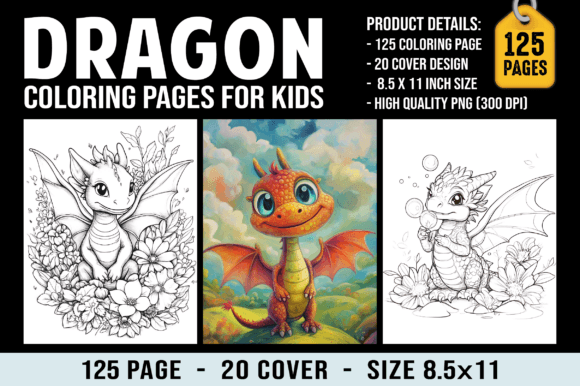
This particular collection—marketed as a Dragon Coloring Book for Kids—stands out due to its deliberate blend of thematic consistency and stylistic variety. Rather than relying solely on cartoonish or realistic dragons, it incorporates trippy patterns, psychedelic-inspired borders, and playful abstractions alongside classic dragon silhouettes. The 125 interior coloring pages are rendered at 300 dpi in 8.5 x 11 inch format, ensuring crisp print quality whether used at home, in classrooms, or during therapy sessions. The inclusion of 20 cover pages adds flexibility for educators or parents who want to customize activity binders or gift sets.
Crucially, the line work is neither too thin nor overly intricate—striking a balance between challenge and accessibility. That means children with emerging pencil control can stay within boundaries without frustration, while those ready for more nuance find subtle details (like scale textures or swirling background elements) to explore. It’s this thoughtful calibration—not just the dragon theme itself—that supports sustained attention and reduces early abandonment of the task.
How It Compares to Other Coloring Resources
When evaluating dragon coloring pages for kids against alternatives, three key dimensions matter: developmental appropriateness, thematic resonance, and practical usability.
- Compared to general “Kids Coloring Pages”: Dragon-specific collections offer stronger narrative hooks. A child may color a generic castle page once; a dragon guarding that same castle invites repeated engagement, character naming, and scenario-building—supporting language development and symbolic thinking.
- Compared to “Relaxation Coloring Pages” or “Stress Relief” books: While adult-oriented designs often prioritize complexity and repetition (mandalas, florals), dragon coloring pages for kids emphasize clarity and visual hierarchy. The bold lines and uncluttered compositions reduce cognitive load, making them more suitable for shorter attention spans and varied skill levels.
- Compared to KDP interior templates or generic line art bundles: Many commercially available KDP interiors prioritize volume over cohesion. This set maintains continuity through consistent stroke weight, spacing, and dragon anatomy—even across stylized variations—so users aren’t confronted with jarring shifts in difficulty or aesthetic tone mid-book.
That said, it’s not universally optimal. For children with sensory sensitivities, the psychedelic patterns may feel overstimulating compared to minimalist animal outlines. Similarly, educators focusing strictly on realism or biology might prefer science-aligned dinosaur or reptile pages instead.
Strengths and Real-World Use Cases
The primary strength lies in versatility. These dragon coloring pages for kids function effectively across multiple contexts:
- In early elementary classrooms: Teachers use them during quiet transitions or as extension activities after reading fantasy literature (e.g., Where the Wild Things Are or My Father’s Dragon). The thematic consistency reinforces vocabulary and sequencing skills.
- In occupational therapy settings: Therapists appreciate the predictable line weight and moderate spacing—ideal for practicing grasp, pressure modulation, and bilateral coordination. The dragon motif also increases motivation for reluctant participants.
- For homeschooling families: As part of interdisciplinary units (mythology, geography, art history), these pages provide tactile reinforcement without requiring advanced materials or prep time.
- For caregivers supporting emotional regulation: Coloring dragons—especially those with calm, grounded postures or gentle expressions—can serve as nonverbal outlets for big feelings. Unlike aggressive imagery, these illustrations avoid reinforcing tension.
Feedback from actual users notes consistent appreciation for the PNG file format: it allows easy resizing, layering in digital art apps, or integration into custom worksheets—something less flexible PDF-only collections don’t support.
Limitations and When to Consider Alternatives
No single resource meets every need—and understanding where this collection falls short helps guide smarter decisions. First, while the 125 pages offer substantial variety, they don’t include instructional content (e.g., color theory tips, dragon anatomy labels, or step-by-step drawing guides). If your goal includes explicit art skill-building, pairing this book with a companion tutorial resource would be advisable.
Second, the emphasis on stylized, sometimes abstract dragons means there’s limited representation of cultural dragon traditions beyond Western tropes—no Chinese lung, no Slavic zmey, no Mesoamerican feathered serpents. Educators aiming for global folklore literacy may need supplemental material.
Third, although marketed as “perfect for grown-ups,” the line work remains distinctly child-scaled. Adults seeking deep meditative focus may find the pages too simple compared to intricate botanical or geometric designs. Conversely, very young children (under age 4) may still struggle with some of the finer internal details—so adult supervision or selective page curation remains helpful.
Making an Informed Choice
Choosing dragon coloring pages for kids isn’t about finding the “best” option overall—it’s about matching features to purpose. Ask yourself:
- What’s the primary goal? Is it skill practice? Calm-down time? Thematic reinforcement? Creative play? Each objective favors different design traits.
- Who’s using it—and what are their physical, cognitive, and emotional needs? A child with dyspraxia benefits more from wide, consistent lines than from decorative flourishes.
- How will it be used? Digital integration? Classroom reproducibility? Gift-giving? File format, resolution, and licensing terms become critical.
This collection excels when you need reliable, printable, thematically unified pages that balance accessibility with visual interest—particularly if dragons already hold meaning for the child (through stories, games, or personal fascination). It’s less ideal if you require culturally diverse representations, progressive skill scaffolding, or high-complexity challenges.
Ultimately, dragon coloring pages for kids serve best not as isolated entertainment, but as one element within a broader ecosystem of creative expression—one that values both joy and intentionality. Whether used to spark conversation, build confidence, or simply offer ten minutes of shared calm, their value emerges most clearly when chosen with awareness of both potential and limits.