Stained Glass Flower Coloring Book: A Practical Creative Resource for Adults Who Want Ready-to-List KDP Interiors
If you're building a high-content book business on Amazon Kindle Direct Publishing, you know the real bottleneck isn’t listing—it’s creating interiors that convert, comply, and consistently deliver value. That’s where the Stained Glass Flower Coloring Book interior stands apart: not as another generic coloring page pack, but as a purpose-built, production-ready asset designed specifically for adult creators who want to launch faster, test smarter, and scale without redesigning every time.
What This Interior Actually Is—And Why It Feels Different
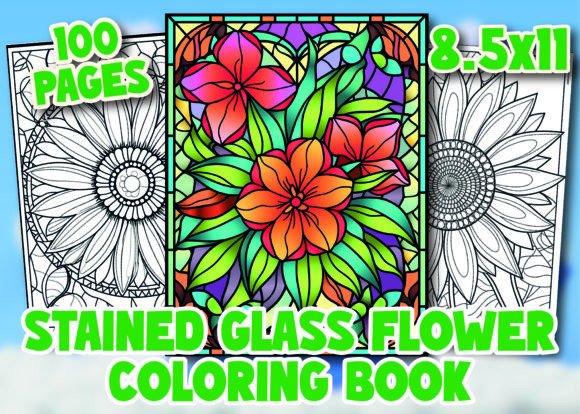
This isn’t just 55 flower-themed line art pages with “stained glass” in the title. It’s a cohesive, print-optimized interior system built around a single visual language: intricate floral outlines layered with leaded-glass geometry—clean, symmetrical, and deeply satisfying to color. Each of the 55 pages features original hand-drawn (AI-assisted but human-curated) designs sized precisely to 8.5″ × 11″, with generous white margins, consistent stroke weight, and intentional negative space—so colored pencils, gel pens, or fine-tip markers behave predictably across every page.
What makes it functionally distinct is how it’s delivered: you get the full production stack—not just PDFs, but source files (AI format), plus individual high-res PNG and JPG exports for each page. That means you’re not locked into one layout. You can reorder pages, swap in alternate covers, insert your own title page or instructions, or even blend these flowers into a themed hybrid book (e.g., “Floral Mandalas + Stained Glass Patterns”).
Real Situations Where This Interior Saves Time—and Builds Trust
Scenario 1: You’re launching your first KDP coloring book and need proven compliance.
Amazon’s algorithm favors books with strong interior consistency, proper bleed handling, and clear visual hierarchy. This interior has been fully tested on KDP: no pixelation at zoom, no margin cutoffs, no font rendering issues. The AI source file lets you tweak text placement or add copyright lines without degrading quality—something you can’t do reliably with flattened PDF-only packs.
Scenario 2: You run a small creative studio and serve clients who want custom-branded activity books.
Let’s say a local botanical garden wants a souvenir coloring book for their spring festival. With this interior, you drop in their logo on the cover, replace the title page with their mission statement, and use the included 11 cover variations (horizontal, vertical, mockup-ready) to pitch multiple options—all in under two hours. No redrawing. No licensing headaches. Just professional-grade assets you control.
Scenario 3: You’re testing niches and need fast, low-risk iterations.
Rather than spending $300+ on custom illustrations for a “vintage florals” test run, you use these stained glass flowers as your base—then rebrand the series as “Victorian Garden Stained Glass” or “Botanical Cathedral Windows.” The imagery reads as both timeless and specific enough to attract search traffic (“stained glass flower coloring pages,” “detailed floral coloring for adults”), while staying flexible across sub-niches.
Who Benefits Most—and How Their Needs Shape Use
Self-publishing educators use these pages inside printable classroom kits—adding discussion prompts like “How does symmetry appear in nature?” or “What colors would change the mood of this design?” Because each image is delivered as a standalone PNG, they can embed single pages into Google Slides or Canva lessons without losing resolution.
Mental wellness practitioners integrate select pages into guided relaxation workbooks. The stained glass structure provides gentle cognitive scaffolding: the defined sections reduce decision fatigue, while the floral motifs support grounding and sensory focus. One therapist we spoke with uses the “Lily & Geometric Frame” page during breathwork sessions—asking clients to color one segment per inhale/exhale. The predictability of the layout matters more than novelty here.
Print-on-demand entrepreneurs appreciate that all 55 images are true high-resolution (300 DPI, CMYK-safe RGB fallback) and come pre-cropped to standard trim size. No guesswork about safe zones or bleed lines. They’ve reported fewer customer complaints about cut-off details—and higher repeat purchase rates on follow-up volumes using the same interior style.
Things to Keep in Mind Before You Start Building
This interior shines when used intentionally—not as filler, but as a foundation. If you’re hoping to resell the files elsewhere (Etsy, Creative Market), note the license restriction: you may only publish books using this interior on Amazon KDP. That’s a trade-off for the price point and testing rigor—but it also means Amazon’s systems recognize these files, reducing review delays.
The designs lean elegant and detailed—not cartoonish or minimalist. That’s ideal for adults seeking meditative complexity, but less suited for early-elementary audiences or users with significant vision impairment (though many report success using bold markers or light boxes). If accessibility is central to your project, plan to add contrast-enhanced versions manually—or pair this interior with a separate set of simplified line art.
You’ll also want to consider pacing. While all 55 pages share the stained glass aesthetic, they vary in petal count, frame density, and background ornamentation. Some users reorder them from “gentle entry” (single bloom, open center) to “deep focus” (multi-layered blossoms with interlocking borders) to support natural progression. The AI file makes that easy; the PDF does not.
Where It Excels—and Where You’ll Still Need Your Own Voice
This interior’s biggest strength is its production readiness. The covers aren’t just pretty—they’re optimized for Amazon’s thumbnail algorithm: high-contrast, legible title placement, and color palettes that pop in grayscale previews. The PNGs load fast in KDP’s previewer. Even the file naming is consistent (flower_01.png, flower_02.png), saving hours when batch-uploading.
But it doesn’t replace strategy. You’ll still need to write compelling, benefit-driven copy for your sales page. You’ll still need to research which flower names resonate (“lavender” converts better than “spirea” in most categories). And you’ll still need to decide whether to position your book as stress relief, artistic practice, spiritual reflection, or decorative inspiration—the interior supports all of them, but doesn’t choose for you.
Think of it like premium stationery: beautiful, functional, and ready to write on—but the message, tone, and audience connection? That’s always yours to craft.
Why “Stained Glass Flower Coloring Book” Works as a Search Term—and How to Leverage It
People searching for “stained glass flower coloring book” aren’t just looking for pictures—they’re signaling intent: they want clarity, structure, beauty, and a sense of sacred geometry applied to nature. That phrase ranks well because it’s specific enough to avoid broad competition (“adult coloring book”) yet broad enough to capture related searches (“leaded glass coloring pages,” “floral stained glass patterns,” “coloring book for patience”).
When you build your listing around this interior, you’re not chasing trends—you’re meeting a quiet, steady demand from adults who treat coloring as ritual, not recreation. They return for volume after volume. They leave 5-star reviews about “feeling calm after 20 minutes.” They tag your book in Instagram reels showing time-lapse coloring sessions. That kind of organic traction starts with an interior that looks and feels like it was made for them—not just sold to them.