Valentine’s Day Coloring Pages for Adults: A Thoughtful Blend of Humor, Art Therapy, and Creative Connection
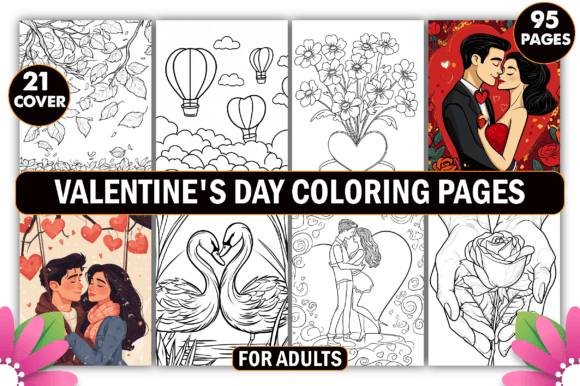
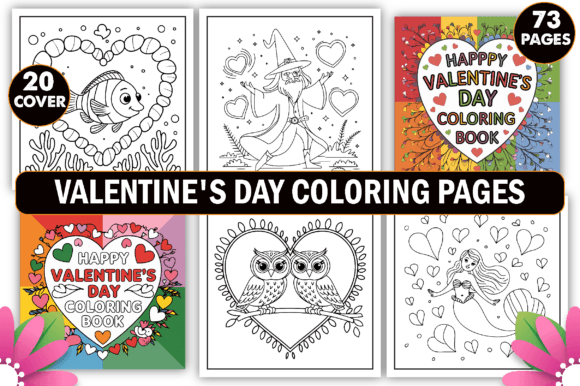
Valentine’s Day Coloring Pages for Adult offer far more than seasonal decoration or fleeting entertainment—they represent a meaningful intersection of psychological wellness, social engagement, and accessible creative expression. Unlike children’s coloring books built around simple shapes and repetition, adult-oriented versions—particularly those designed with wit, narrative depth, and visual sophistication—invite sustained attention, emotional resonance, and intentional presence. The Valentine’s Day Coloring Book for Adults Funny JUMBO collection exemplifies this evolution: 73 thoughtfully composed black-and-white illustrations that balance levity with aesthetic richness, all optimized for real-world use across personal, educational, and commercial contexts.
Why Humor Transforms Coloring from Pastime to Practice
Laughter is not merely mood-enhancing—it modulates autonomic nervous system activity, lowers cortisol levels, and increases dopamine availability. When integrated into coloring design, humor serves as both cognitive anchor and emotional release valve. Consider the “Cupid Got His Wi-Fi Password Wrong” scene: a flustered cherub staring at a blinking router, arrows scattered beside a half-eaten heart-shaped pizza. This isn’t just silly—it reflects shared modern experiences, making the act of coloring feel less like solitary labor and more like quiet camaraderie. Similarly, pages featuring sarcastic love notes (“I Love You More Than My Phone Battery at 3%”), absurd pet romances (a pug proposing to a cactus), or tongue-in-cheek dating app parodies invite recognition before relaxation. That moment of recognition—the “oh, yes, *that’s* me”—is where stress begins to recede and neural pathways shift toward restorative focus.
Design Integrity Meets Practical Utility
The technical execution of these Valentine’s Day Coloring Pages for Adult directly supports their functional value. Each illustration is delivered in three high-fidelity formats—JPG, PNG, and EPS—at 300 dpi resolution, ensuring crisp reproduction whether printed on home inkjet paper or offset lithography stock. The A4 / 8.5×11″ sizing conforms to global printing standards without requiring cropping or scaling adjustments—a critical detail for educators distributing materials in classrooms, therapists integrating pages into group sessions, or KDP publishers preparing print-on-demand files. The inclusion of an EPS vector file further enables scalable adaptation: a teacher might enlarge a single page for a bulletin board display; a small business owner could reformat a design for greeting cards or café coasters; a designer might extract linework for embroidery digitization. This flexibility transforms static pages into modular creative assets.
Stress Relief Grounded in Evidence-Based Principles
Coloring’s therapeutic efficacy isn’t anecdotal—it aligns with established models of attentional control and flow state induction. When adults engage with intricate line work, bilateral hand movement, and deliberate color selection, they activate the prefrontal cortex while gently inhibiting default-mode network activity—the same neural configuration observed during mindfulness meditation. What distinguishes the Funny JUMBO collection is its intentional scaffolding of this process. Pages avoid overwhelming density in favor of rhythmic variation: some feature tight botanical borders framing lighthearted scenes (e.g., “My Heart Is Full… Of Leftover Chocolate”), while others use generous negative space to allow breathing room between elements. This calibrated complexity prevents frustration without sacrificing engagement—crucial for users managing anxiety, ADHD-related restlessness, or chronic pain flare-ups. Real-world observation confirms this: occupational therapists report higher adherence rates when humorous themes replace clinical or abstract motifs, particularly among male-identifying adults who often perceive traditional art therapy as culturally incongruent.
Shared Creation as Relationship Infrastructure
Valentine’s Day Coloring Pages for Adult are uniquely suited to relational practice—not only as gifts but as co-created rituals. Couples, friends, multigenerational families, and even workplace teams have adopted coloring sessions as low-pressure alternatives to conversation-heavy gatherings. One user recounted hosting a “Color & Confess” evening: participants selected pages reflecting personal relationship quirks (“We Argue About Which Streaming Service Has Better Rom-Coms”), colored silently for 20 minutes, then shared interpretations—not as analysis, but as gentle entry points into deeper dialogue. Educators use similar frameworks in social-emotional learning units, assigning collaborative coloring of symbolic scenes (e.g., intertwined vines forming a heart) to explore interdependence without verbal abstraction. The book’s ready-to-print format removes logistical friction: no lesson planning required, no material sourcing delays—just immediate access to shared creative grounding.
Commercial Implementation Beyond Print-on-Demand
While optimized for KDP upload—with a professionally designed cover suite (20 PNG variants at 300 dpi) and instant digital delivery—the asset package supports diverse revenue models. Designers license individual illustrations for SVG cut files used in Cricut or Silhouette projects; stationery brands integrate select pages into premium notecard collections; mental wellness apps license high-res JPGs for guided digital coloring modules with adjustable opacity layers. Even non-coloring applications emerge organically: a community garden repurposed the “Love Grows Here (Even If My Plants Don’t)” page as a stencil for painted walkway stones; a university counseling center adapted “My Love Language Is Sarcasm & Snacks” into laminated discussion prompts for peer support groups. The absence of copyright restrictions on end-use (beyond resale of unaltered PDFs) invites adaptive reuse—making these pages infrastructure rather than inventory.
Accessibility Considerations Embedded in Form
Inclusive design emerges not through add-ons but through foundational choices. Line weight consistency (1.5–2 pt minimum) ensures visibility for users with mild visual impairment; ample spacing between adjacent elements reduces crowding-related fatigue; thematic diversity avoids romantic exclusivity—pages include platonic devotion (“Best Friend Breakup Recovery Kit”), self-love affirmations (“I Am Enough, Even Before the Chocolate Arrives”), and queer-coded symbolism (rainbow-wrapped presents, gender-neutral silhouettes embracing under constellations). Notably, no page relies on text-dependent humor alone; visual gags operate independently of literacy level or native language, broadening usability across ESL learners, neurodivergent individuals, and international markets. This intentionality makes the collection viable in public libraries, senior centers, and corporate DEIB initiatives—not just hobbyist spaces.
Integration Into Daily Routines Without Disruption
Unlike practices demanding dedicated time blocks or specialized environments, Valentine’s Day Coloring Pages for Adult integrate seamlessly into existing rhythms. A nurse colors during short breaks between shifts; a software developer prints two pages weekly to place beside her dual monitors; a retiree completes one illustration each morning with coffee, using the same set of colored pencils for months to build tactile familiarity. The portability of the digital file means access isn’t tied to physical storage—pages can be loaded onto tablets with stylus support for travel or hospital stays. Teachers embed single pages into sub plans; therapists email targeted illustrations as between-session “grounding assignments.” This frictionless integration is why adherence remains high: it meets users where they are, rather than asking them to rearrange life around the tool.
Long-Term Value Through Iterative Engagement
A coloring book’s lifespan extends beyond first use when its content rewards revisiting. These 73 pages support layered interaction: initial coloring focuses on line navigation and color selection; subsequent passes invite annotation (adding handwritten notes in margins), collage (cutting out elements for mixed-media projects), or reinterpretation (using metallic pens on previously colored sections). Some users treat pages as visual journals—coloring the same “First Date Disaster” scene multiple times across years, each iteration reflecting shifting perspectives on vulnerability and connection. This iterative potential transforms the collection from consumable product to evolving companion—aligning with research showing sustained creative practice correlates more strongly with well-being outcomes than isolated intensive sessions.
Conclusion: Beyond February 14th
Valentine’s Day Coloring Pages for Adult succeed precisely because they refuse to be confined by their holiday label. They function as cognitive calibrators, social catalysts, commercial raw material, therapeutic tools, and quiet declarations of self-worth—all encoded in clean linework and irreverent charm. Their strength lies not in novelty, but in fidelity: fidelity to human complexity, to practical constraints, and to the unassuming power of putting pigment to paper. Whether used to soften a difficult diagnosis, spark conversation across generational divides, or simply reclaim five uninterrupted minutes in a fragmented day, these pages prove that joy, relief, and connection need not arrive wrapped in grand gestures—they’re already waiting, outlined in black, ready for your choice of color.